
Pros and Cons of Shop Flooring Material
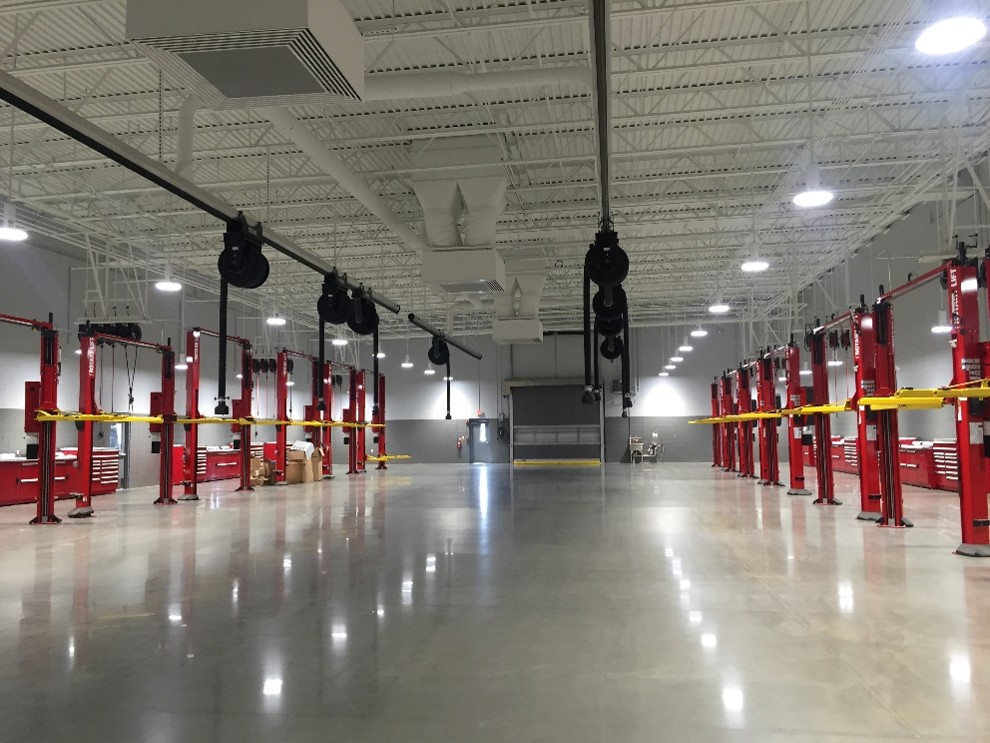
One of the most common requests PRAXIS3 team members receive from Dealers is a recommendation for shop flooring material. Most Dealers have experience with one or two product types, with varying degrees of success, and hope that we can recommend a silver-bullet product that has a low initial cost, is highly durable, and requires minimal maintenance. When a manufacturer’s brand allows for several flooring options, each with varying costs and appearances, our response is almost always the ubiquitous, “It depends…”
What is the Dealer’s goal for the Shop?
Are they looking to meet a brand requirement with the lowest possible initial cost outlay?
Are they hoping to find a solution that wears better than the flooring in one of their current shops?
Do they have a specific cleaning regimen they want to continue using?
Do they have a highly visible shop that requires a certain visual aesthetic for customers?
We posed these questions to Mr. Robert Shreve, AutoNation’s Facilities Supervisor for the Eastern Region. In his twenty-two years with AutoNation, Mr. Shreve has dealt with all types of shop flooring, both new and old, across various climates along the East Coast.
He proposed a question that a Dealer might not consider as part of this equation: What is the culture of the shop?
If the Service Manager has a strong commitment to maintaining a clean workspace and demonstrates that commitment to the technicians and cleaning staff, the flooring is more likely to be maintained properly. He commented, “The best flooring product is only as good as the preparation of the subfloor and the maintenance schedule.”
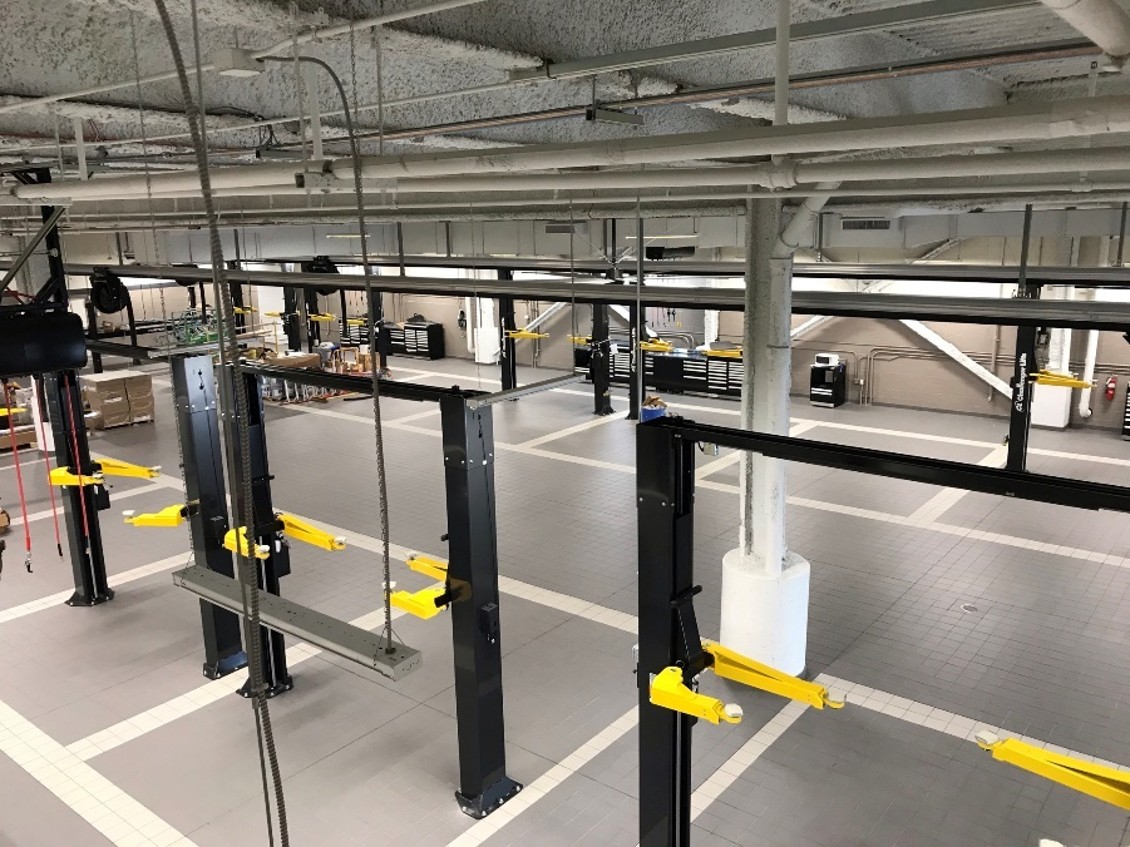
As with most “it depends” decisions, there is a balance between appearance, cost, and durability. While every Dealer will ultimately make a decision based on their primary goal, we have put together a quick matrix comparing the features of the most popular shop flooring options: sealed concrete, polished concrete, tile, and epoxy. This chart is based on pricing available at the time of publication (Summer 2021).

Once a Dealer has identified the product that best meets their goals, it is critical for the Design Team to provide the General Contractor with installation specifications. These should include pre-construction conferences with the subcontractor and proper testing of the subfloor for flatness and moisture content.
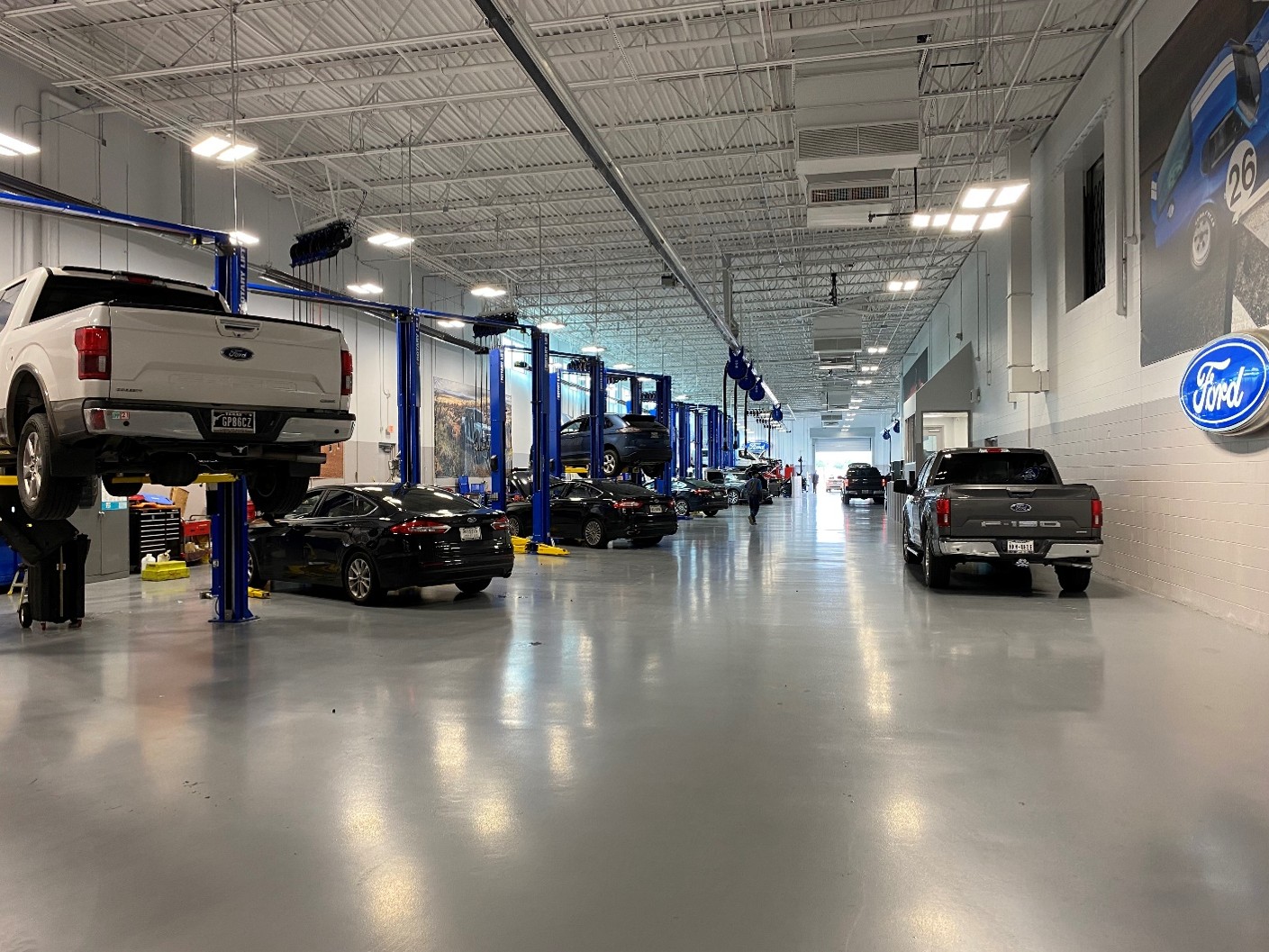
When budgeting for operating costs, Mr. Shreve advises Dealers not to skimp on funds for proper floor maintenance. Allocating funds for more frequent routine cleaning, including the necessary staff and equipment, will help ensure the flooring meets the expected lifespans noted above. In most cases, regular maintenance is also required to maintain the manufacturer’s warranty. The team of designers, architects, and specifiers at PRAXIS3 will work with each Dealer to understand their goals and budget when specifying shop flooring.
Thank you to Mr. Robert Shreve, Facilities Supervisor for the Eastern Region of AutoNation, for contributing to this article.
We also thank John Auble of CJI Construction, Mark Verry of Desco Floor Systems, and Phil Whitehill of RLH Construction for providing pricing information.
Let's Discuss Your Vision
Every great design begins with a conversation. At PRAXIS3, we're not just architects; we're storytellers, innovators, and visionaries. Reach out to us to discuss how we can bring your project to life with a blend of creativity, functionality, and sustainability.