
Planning for Community
.jpg)
Architects contribute to the built fabric of our cities through individual projects, but a great deal of effort happens far earlier in the planning process, when members of that community have the opportunity to provide input on the development. At its core, planning is community building. At PRAXIS3, we plan for our client’s needs when creating a brand, a building, or a campus. In historical neighborhoods, where every decision carries cultural weight, volunteer committees set and enforce the rules to ensure a project still has a common thread with its neighborhood.
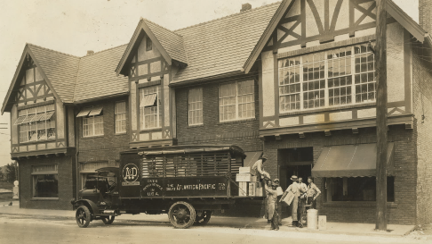
One advantage to working for PRAXIS3 is that we encourage involvement in shaping our local communities outside of the office. Since 2019, I have been exercising that opportunity as a volunteer Chair of the Avondale Estates Historic Preservation Commission which is located less than 10 miles from PRAXIS3’s office in downtown Atlanta. The Commission was founded in 1924 to oversee the first planned city in the Southeast. With this in mind, planning is critical to ensure that civic improvements are compatible with the historic character of the community. Recently, I attended the Community Planning Academy hosted by Atlanta Regional Commission, the official planning agency for the 11-county Atlanta region. Here’s what I learned.
Preservation is one of the most influential practices in the planning process and is often more sustainable than new construction. Reusing existing buildings reduces demolition waste while maintaining the authentic character of a city block. It also typically costs less to repurpose an old building than to construct a new one. In addition, preservation promotes economic development: people want to experience authentic spaces, and historic districts create a unique sense of place.

Property owners can save money on improvements while also maintaining the historic character of their home or business. To achieve this, they utilize historic rehabilitation tax credits, which Georgia offers as a 25% state income tax credit up to $100,000 for historic homes or $300,000 for income-producing properties. It is the purview of the preservation commission to authorize and review individual applications for this credit and to oversee their construction.

I appreciate the opportunity to make an impact on the historic charm of Avondale Estates. Of course, I am not the only one at PRAXIS3 involved in our wider communities. My colleagues also participate on design review boards, school advisory boards, and affordable housing think tanks. In this way, we have a pulse on the development happening in our region and can contribute the architect’s special skills for creative problem solving to the ways our communities are shaped.
Let's Discuss Your Vision
Every great design begins with a conversation. At PRAXIS3, we're not just architects; we're storytellers, innovators, and visionaries. Reach out to us to discuss how we can bring your project to life with a blend of creativity, functionality, and sustainability.