
Our Journey to WELL Certification: From Personal Passion to Practice
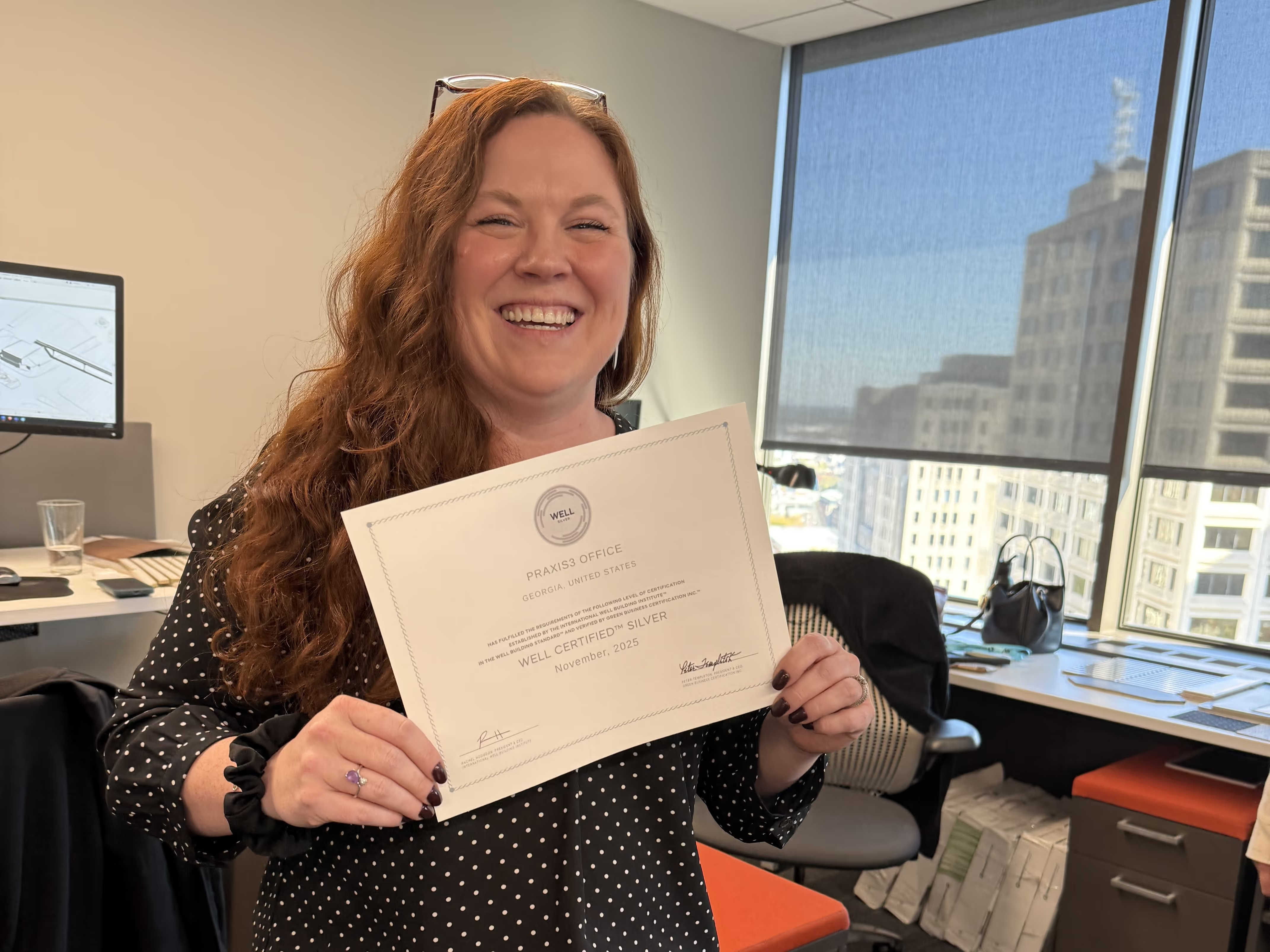
At PRAXIS3, we’ve long believed that good design should support the people who use it, not just functionally, but physically and mentally as well. Those who know me know that sustainability and human-centered design have been passions of mine for as long as I can remember, and that commitment is what ultimately inspired me to pursue my WELL Accredited Professional (WELL AP) credential. When I began looking for a meaningful way to put that knowledge into practice, an opportunity presented itself close to home.
Around that time, our firm was experiencing rapid growth and planning an expansion of our office. It felt like a natural opportunity to apply these principles in a real-world setting, so I proposed that we use the renovation to pursue WELL Certification, allowing PRAXIS3 to lead by example and better understand what it takes to design, operate, and build policies for human health and wellness. Leadership agreed, and our WELL journey began.
WELL is often compared to LEED, and while both are performance-based certifications, they serve different goals. LEED focuses on environmental sustainability; WELL focuses on human sustainability: air quality, light, movement, comfort, mental wellbeing, and the policies that support them. For us, WELL felt like a natural extension of how we already think about design and operate as a business.
Rather than hiring a consultant to manage the process, we chose to take it on internally (aside from required third-party performance verification testing). That decision wasn’t about saving money, it was about building real, hands-on expertise. We wanted to understand the process from the inside out so we could better support our clients should they choose to pursue WELL themselves.

Some elements aligned easily with our existing practices, while others required more effort. Many policy-based features reflected things we were already doing but needed to formalize. Lighting requirements and thermal comfort proved more complex, requiring months of monitoring and close coordination with the building facilities team. The process reinforced an important lesson: wellness isn’t always visible, but it requires intention and follow-through.
One of the most meaningful outcomes was the employee survey, which gave our team a voice and provided leadership with clear priorities for improvement. Because WELL requires recertification every three years, that dialogue, and accountability, continues.

For PRAXIS3, this journey wasn’t just about achieving a certification. It was about reinforcing our responsibility, as designers, to support the health and wellbeing of the people we design for and alongside every day.
Interested in learning how WELL certification could benefit your project? We’d love to be a partner on your journey.

Let's Discuss Your Vision
Every great design begins with a conversation. At PRAXIS3, we're not just architects; we're storytellers, innovators, and visionaries. Reach out to us to discuss how we can bring your project to life with a blend of creativity, functionality, and sustainability.